

I loved my Khuda Gawah audio cassette. A little different from the regular cassettes one was used to seeing back in the day, it was a neatly packaged case with a brown cover. At first glance looked like a pack of chocolate. The layout had film’s title emblazoned on it in big block letters. The faces of its starry ensemble — Amitabh Bachchan, Sridevi, Nagarjuna, Shilpa Shirodkar, Danny Denzongpa, and Kiran Kumar appeared in descending order — looking every bit of a blockbuster movie it had set out to be. Photos of the film’s strapping lead pair dressed in grand Afghan costumes would pop up in film magazines describing director Mukul S Anand’s ambitious project. The songs were already a rage. If you were a Bollywood fan, this was exactly the kind of film to be excited about. More so if you were a cinema-crazy school kid. I remember being obsessed with Bachchan’s ‘Sar Zameen-e-Hindustan’ monologue that was the final item of the film’s soundtrack. I’d play it on repeat to the point of memorizing the lines like some school lesson.
For those of us growing up in the ’90s, the fabled Bachchan superstardom was something one learnt about second hand — from people of the previous generations, showbiz magazines, tv interviews etc. The ageing actor was doing fewer films by then and a whole generation of young stars were ruling the roost. I hadn’t, until then, watched a Big B film on the big screen. Khuda Gawah would become that one.
To watch Bachchan hysteria in full glory in a packed single screen in my hometown surrounded by a big group of family and friends is an indelible memory. The communal, frenzied experience of the whole theatre erupting into loud cheer and thunderous applause when their screen idol tears into the frame riding a horse in the famous opening sequence of buzkashi cleared up any ignorance one had about the superstar’s influence.
Back then, smaller cities and towns ran film shows with limited prints. Khuda Gawah was playing in two theatres in my city that had adjusted their timings so that they could play the reels one after the other at their respective shows. It happened so that halfway into our screening, the cinema hall management informed that the remaining reels were still being run at the other theatre and to make up for the wait period they’d play the film’s songs to keep the viewers engaged. Just as the announcement got over, “Main aisi cheez nahin” started playing on the screen. I was half-expecting the crowd to be irate or create a ruckus about the snag but people started shouting excitedly and dancing at their seats. This, to date, remains one of my favouritest film watching experiences.

Over the years and despite multiple viewings of each, I continue remain loyal to Khuda Gawah as my most beloved Mukul S Anand film among his famous ’90s troika. Sure Hum (1991) is technically superior, a far more engrossing film and Agneepath (1990) a deeper, darker drama. But my reasons for sticking to Khuda Gawah are simple. The childhood connection notwithstanding, it is the most Manmohan Desai-esque film I can think of from that era. Anand creates, if I may say so, a brilliant masala retelling of the Kabuliwala story. A proud Afghan forced by circumstances to spend his life in an Indian prison — away from his family and motherland. Only, our story has a series of separations, reunions, a bunch of bad guys, noble-hearted strangers, devoted friends, themes of secularism and brotherhood. Familiar elements that one is used to seeing in the highly entertaining films of MMD, and who Anand considers an inspiration.
Mukul Anand’s remarkable eye capturing Afghanistan in its complete majesty, the dil-phenk dialogues, and the film’s ability to deliver the momentous occasions — Baadshah Khan’s departure from Kabul, his bonding with the Indian jailor, the emotionally-charged father-daughter confrontation, and a breathtaking climax befitting of Big B and Sridevi’s prowess — Khuda Gawah is tailor-made for those who relish Hindi masala filmmaking.
But what I would remember the film the most for is its electrifying leading lady, Sridevi. At that point in time (and still so), I was a bona fide Madhuri Dixit fan and as anyone who knows their ’90s Hindi film rivalry history right, you could either be Team Madhuri or Team Sridevi. The debates would rage over Hawa Hawai vs Ek Do Teen or who looked cuter in some film magazine cover and so on. I have had numerous such arguments with my sister who was a devoted Sri fan and was the most excited to catch Khuda Gawah on the big screen.
As the badass Benazir in the film, Sridevi stood at par with Bachchan’s towering personality matching him down to the last line every time they are in a frame together. In Benazir’s strong-mindedness and her subsequent decline to insanity, Sri’s competence remains unfaltering as does her natural charm in playing the energetic, high-pitched daughter, Mehendi.
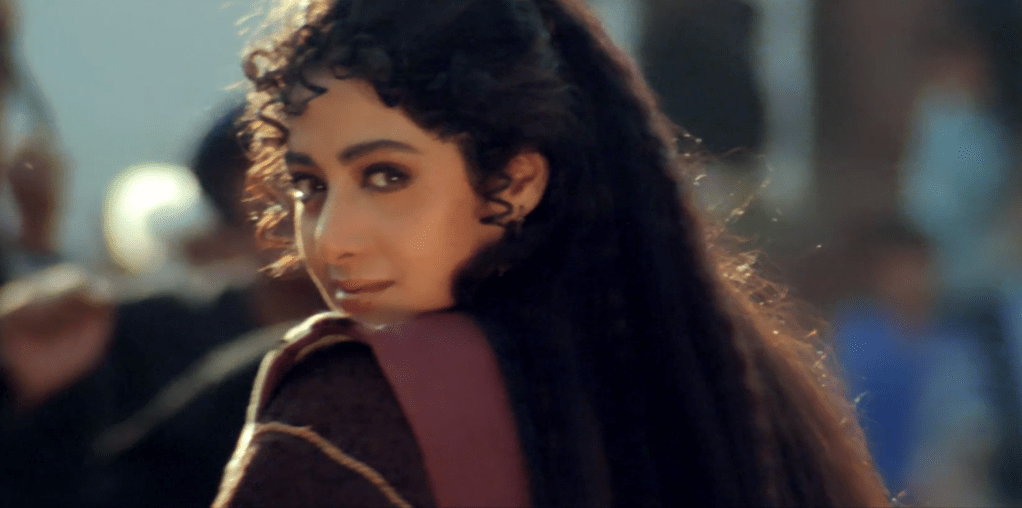
“Bijlee gir gayi hai mere dil pe,” Baadshah Khan remarks when he first lays his eyes on Benazir during the deciding moment of the Buzkashi match — effectively losing both the match and his heart. It’s a stunning sequence where Sri’s glowing, defiant eyes perfectly establish her stake in this brutal sport dominated by men. And soon it’s the expression on her face — capturing her shock, embarrassment, surprise, frustration and even amusement at Baadshah Khan gaping at her the moment her turban falls off revealing her identity as a beautiful woman — where the actress’ unmistakable charisma dazzles through. It had a deliriously joyous effect on the crowd that wouldn’t stop clapping and hooting. She really was a star that everyone said she was. And Baadshah Khan was right about the ‘bijlee‘ for it effectively ended of my hostility, albeit inconsequential, towards Sridevi.
By the time the film was over, I knew my sister and I would have one less thing to argue about.
[Movie screenshots courtesy: Amazon Prime]
All images used on Flashback Bollywood are the property of their respective owners and are used for representational purposes only.
 Flashback Bollywood