
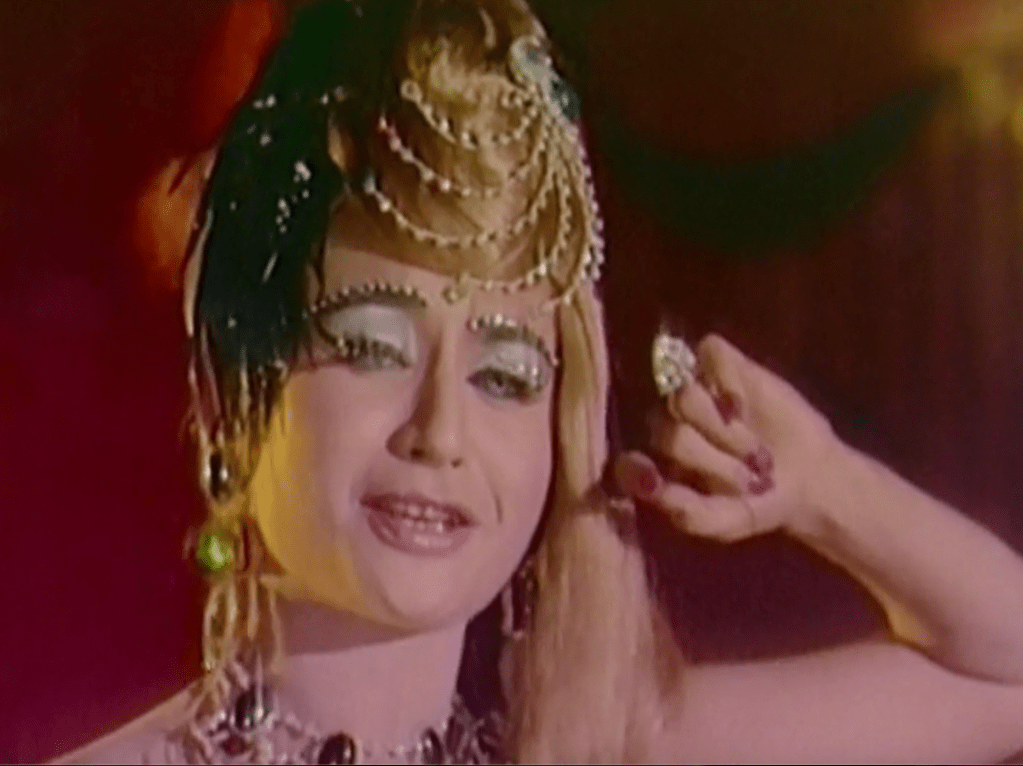
Making a gradual progression from cabaret, kothaas, discos and now just about everywhere — item numbers today have become an essential feature of Bollywood. An item number, in its earliest avatar, wasn’t endorsed by the industry’s leading ladies. Only vamps or dancers making special appearances in the films graced these tracks until a decade or two ago. Bombay Cinema’s first major dancing star was Cuckoo who ruled the cabaret scene in the Forties and the Fifties. Maybe because of the era’s social construct or perhaps it was a novelty that filmmakers introduced an unconventional face — and this petite Anglo-Indian girl danced her way into stardom. Cuckoo’s vivacious demeanour and lithe moves were completely in sync with the playful cabaret and party songs she starred in. Whether it’s enticing a sloshed Prem Nath in that mesmeric dance sequence in Aan (1952) or prettily pirouetting to Kabhi Haar Kabhi Jeet in Shabistan (1951), Cuckoo had moves for all occasions.

Cuckoo’s mantle was taken up by her protégé, Helen, who went on to become the undisputed tsarina of cabaret. The extremely affable Mera Naam Chin Chin Chu (Howrah Bridge, 1958) was Helen’s high road to Bollywood glory. An instant crowd puller, a Helen sequence in a movie guaranteed full house – a phenomenon unseen for any dancer preceding or succeeding her.
If transformation was an art, Helen perfected it. She could be the sexy siren pining for her lover in Piya Tu Ab Toh Aaja (Caravan, 1971), or the avenging angel in Yeh Mera Dil (Don, 1978) or the gorgeous gypsy girl shimmying unabashedly to Mehbooba in Sholay (1975) – each done with equal ease. With her seductive expressions and alluring adaa, Helen played high on male fancy. Her performances filled the fantasy void that the pristine leading ladies of that era could never attempt. Never shy to experiment, Helen’s dramatic eye makeup, unique ensembles and outlandish props accentuated the aesthetics of her songs. Be it the drunk men in the ratty bar dancing to her tunes as she rocked the deep-cut blouse and Koli-styled saree look in Inkaar’s (1977) Mungda Mungda or the elite patrons dazzled by her embellished eyes, fancy feathers, and sequined figure-hugging dress in Intaqam’s (1969) Aa Jaane Jaan, every time Helen was on screen she was a sight to behold.
Helen’s songs gave Bollywood a real taste of hedonism, and Bindu and Aruna Irani’s songs took it to the next level. A shocking sartorial sense with candour to match, Bindu was the temptress waiting to be unleashed. Her provocative declaration Mera Naam Shabnam Hai (Kati Patang, 1970) is an iconic moment of ’70s cinema. True to the cinematic definition of a vamp, her Shabnam teases, terrorizes and even threatens the film’s heroine during a cabaret performance. Or how she mocked and heaved at a brooding Amitabh Bachchan in Dil Jalon Ka Dil Jalaa Ke (Zanjeer, 1973) or the Arabian Nights style seduction song Aa Ke Dard Jawaan Hai (Pran Jaye Par Vachan Na Jaye, 1974) — Mona Darling was always a huntress on the prowl. It’s a testament to Bindu’s timeless charm that her sensational club classic Hungama Ho Gaya (Anhonee, 1973) became a resounding success when it was reintroduced in the 2013’s much loved hit Queen.
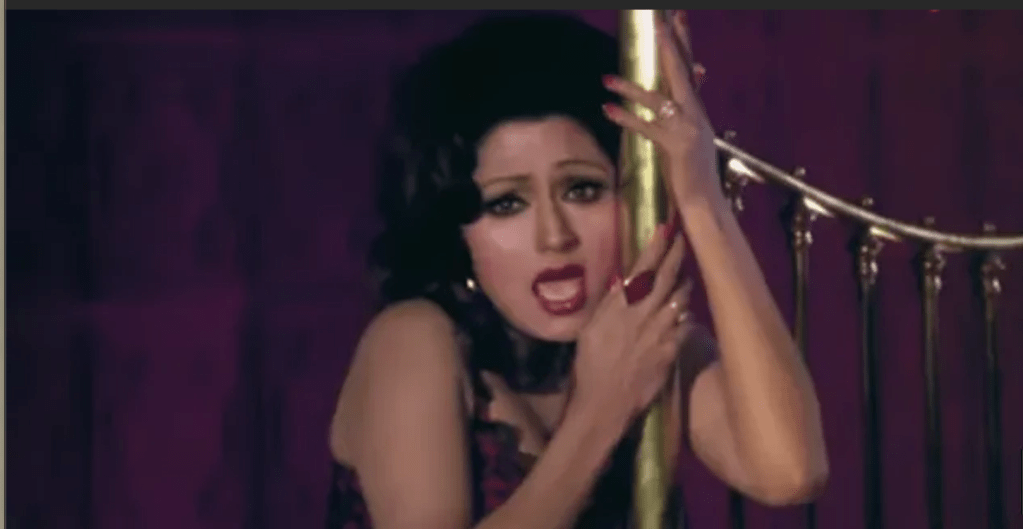
Though she had entered the industry as a leading lady, Aruna Irani found success and recognition in negative roles which often required her brilliant dancing skills. Gliding through the silky notes of Main Shayar Toh Nahin (Bobby, 1973), Aruna looked like a dream. As mujraa and qawaalli became her specialty, the action of these dance numbers soon shifted to kothaas and mehfils. Kathak and Irani’s coquettish charm resulted in perfect recipes like Sham-e-furqat Ka Dhal Gayaa (Sanyasi, 1975), Kahin Se Koi (Bhoola Bhatka, 1976) and of course the evergreen Thoda Resham Lagtaa Hai (Jyoti, 1981). Each of these dancing queens brought something unique to the table, so it needed only them or someone following the same template to achieve the desired result. So for a seductive Kaisey Kat’ti Hai Raat (Gaon Hamara Shaher Tumhara, 1972), there’s the ever dependable Padma Khanna and for an Auva Auva (Disco Dancer, 1982) there’s Kalpana Iyer dressed in a blingy poncho-like top and shorts, shiny high-heeled boots and swinging under colourful disco lights. With the Eighties arrived this new brigade of bold, brash dancers like Iyer and Prema Narayan who excelled in western moves. It won’t be wrong to say this group’s might is increasing ever since.
The trend of heroines appearing in these special numbers — that had the look and feel of songs done by the dancing divas — began with the likes of Zeenat Aman (Qurbani, 1980 and Shalimar, 1978), Parveen Babi (Shaan, 1980 and Namak Halaal, 1982) and Rekha (Jaanbaaz, 1986), and was taken forward in the next generation by Madhuri Dixit (Khalnayak, 1993; Sailaab, 1990), Urmila Matondkar (China Gate, 1998; Lajja, 2001), Raveena Tandon (Rakshak, 1996 and Ghaath, 2000) and Sonali Bendre (Bombay, 1995) among others.

In the new millennium, every major and minor actress has had a special performance, by now known as item number, in her kitty. Right from Koena Mitra to Katrina Kaif, Shilpa Shetty to Kareena Kapoor — each one of them has succumbed to the appeal of an item number. As for the performances, they came in all flavours: there’s the scandalous Sexy Sexy rechristened as Baby Baby (Khuddar, 1994), an earthy Main Aayi Hoon UP Bihar Lootne (Shool, 1999), trippy Mahi Ve (Kaante, 2002), fabulously wild Khallas (Company, 2002), flirty Kajraa Re (Bunty Aur Babli, 2005) and an exotic Maiyya Maiyya (Guru, 2007). Hence one doesn’t go looking for a Bindu to gyrate to Beedi (Omkara, 2006) as Bipasha is right here to take care of it. For every Aruna, there is an Aishwarya and for every Padma there is a Priyanka. Sure there are item number specialists like Malaika Arora, Yana Gupta and Rakhi Sawant, but they haven’t been able to hold on to the space exclusively. An item number, in its early form, began like a Gharana culture — reminiscent of a specific style and had its players. But the space is now democratized and the focus has slowly shifted from dancers to the track’s X factor. So there’s Chaiyyan Chaiyyan (Dil Se, 1998) happening on the top of a train or Munni Badnaam (Dabangg, 2010) with the most outlandish lyrics, or even an ‘item boy’ balancing the scale with Dard-e-disco (Om Shanti Om, 2007). If that isn’t all, global artistes like Samantha Fox, Tata Young and Kylie Minogue, too, have made special appearances adding a new dimension to the trend of item numbers.
With the sheer number of songs taking over, the one thing that has gone missing from the segment is significance — more specifically the connect to the story. Most of these item songs enter into the picture for no rhyme and reason. Agreed they are peppy, the energy is infectious and the girls are fab, but very few of such songs have a timeless feel to them. Rarely does one find an evocative number like Aaj Ki Raat Koi Aane Ko Hai (Anamika, 1973) that has a story woven in it, or the exhilarating charm of Oh Haseena (Teesri Manzil, 1966), or the looming helplessness a Husn Ke Laakhon Rang (Johny Mera Naam, 1970) displays when Padma Khanna performs a striptease to save her lover’s life from his ruthless boss. Each of these dance numbers were top-shelf stuff with the most scintillating women performing them with a sense of reason. And that, perhaps, made all the difference.
The post first published in Pixelonomics in 2010. This is an edited and updated version.
All images used on Flashback Bollywood are the property of their respective owners and are used for representational purposes only.


when was this article edited and updated as I need to site it in my essay for reference. Please could you reply?
LikeLike
Hello Nitya, my apologies about the delayed response. This was last edited sometime in 2018 if I remember correctly. Hope this helps.
LikeLike