

The little-known ’70s director made Shaitaan and Kashmakash, two eminently watchable thrillers from the era, which have earned him a small but dedicated following among genre loyalists.
The 1970s was perhaps the most diverse decade in Hindi cinema history. Masala multi-starrers had become trendy. Movements such as Parallel Cinema and Middle Cinema were simultaneously taking root. Within mainstream cinema too, several styles were thriving courtesy of the old-timers and a new league of Film and Television Institute of India-trained filmmakers who had entered the fray. A segment of films that really took off in this decade were the action dramas and thrillers made on small budgets with actors who were not A-list stars but bankable regardless. These films offered great entertainment and often had commercial success. Dismissed as escapist pulp by purists, some films in this category like Agent Vinod (1977), Khoon Khoon (1973), and Elaan (1971) have acquired cult status.
As has Firoze Chinoy, the director of Kashmakash (1973) and Shaitaan (1974). These two eminently watchable thrillers have earned the filmmaker a small but dedicated following among genre loyalists.
Chinoy had a remarkably short career with only four films under his belt. This FTII graduate debuted with Do Raha (1971), which featured his film school pals Anil Dhawan, Radha Saluja, and Shatrughan Sinha. In fact, one of the posters of the film proudly proclaims, “The first film completely and entirely made by a young army of Film Institute of India graduates” (sic). The film explored the influences of westernisation on Indian youth and made quite a buzz for its audacious treatment of subjects like premarital sex and promiscuity. It was a surprise hit. It won’t be a stretch to say Do Raha benefitted from the wave of ‘bold films’ like Chetna and Dastak, which had hit theatres the previous year. Do Raha’s provocative themes and posters notwithstanding, it was pretty moralising fare that questions society’s hypocrisy but lays the burden of morality on women. Nevertheless, it gave a glimmer of Chinoy’s ease at dealing with themes that are usually considered lowbrow, such as sex and crime.
Chinoy’s sophomore outing, Kashmakash, was a murder mystery and couldn’t have been any more different from his first film— both in terms of tone and directorial style. It’s a decidedly fun film with a good star cast, a first-rate background score, and employs the ‘70s filmi flamboyance to the right use. Even at its most preachy, Kashmakash is hilariously suggestive and thoroughly cringey—and therein lies its brilliance.
For the main role, Chinoy sought Feroz Khan. The stylish star’s presence was sufficient to generate interest in this suspense drama. It centred around a married man Satish (Khan), whose intended one-night dalliance with a cabaret dancer Sapna (Padma Khanna), while his wife Sita (Rekha) is away, lands him in a pickle. Sapna gets murdered the night he visits her. A fearful and guilt-ridden Satish must do everything to keep the needle of suspicion away from him. To make matters worse, the inspector probing the case (Shatrughan Sinha as a competent second lead) happens to be the fiancé of Satish’s sister.
The film’s sets, props, and aesthetics are deliciously campy and function as an early illustration of several Bollywood clichés that the industry would eventually be associated with. There are neon lights, naughty figurines, and the famed bottle of VAT 69 to suggest impropriety, as there are shady villains and a psychedelic den crawling with mean-looking henchmen. Padma Khanna entertains patrons dressed in a glimmering outfit that literally reads 36 24 36—also her phone number!
And as her former lover and the other murder suspect, Johny is Ranjeet—’70s Bollywood’s favourite debauched guy—who deserves a dissertation for his wacky sartorial choices.
However, Kashmakash’s true unintentional hilarity comes from Khan as the lonely, horny husband, who, among other things, fantasises of an amorous song with his faraway wife. ‘Jitna zaroori mann ka milan, tann ka milan utna hi zaroori,’ (Just as it’s important for minds to meet, it’s important for bodies to meet too). Satish makes this abundantly clear in his imaginary romantic romp where his attempt to pull Sita into the shower with him ends abruptly. Why? Because he has rolled over Sita’s framed photo unknowingly, broken it, and got hurt by it in reality! The scene is supposed to justify his grudge about Sita’s absence and how this triggers him to seek another woman, but it is done so artlessly that it’s impossible to not laugh at Satish’s ‘plight.’
Kudos to Chinoy for envisioning Khan in a character that’s desperate and even embarrassing as opposed to the macho man image the actor is known for. To fix the mess he is in, Satish’s actions veer from comically awkward to outright foolish, but try he does. Moreover, the role wasn’t how one was used to seeing the Hindi film hero: flawless and incapable of surrendering to shameful temptations. But there’s only so much envelope-pushing that can happen to this end. The wife, furious about her husband’s indiscretion, realises it’s her prolonged absence that made him falter and forgives him. “Tum gire ho toh meri wajah se,” she declares guiltily. (If you’ve fallen from grace, it’s because of me). “Tum devi ho,” he replies gratefully. (You’re a goddess). She is Sita, after all. If there’s moral posturing, the film is also comfortable in depicting physical intimacy between two older characters without making it look sleazy and yet being sufficiently naughty.
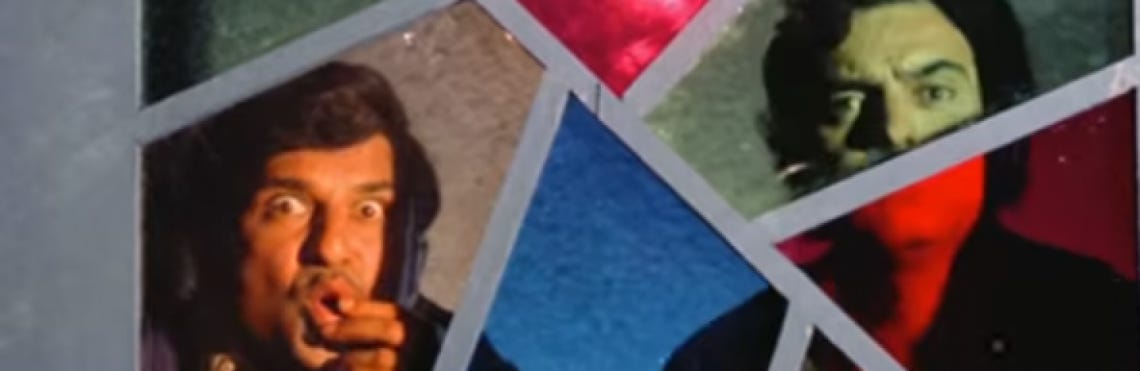
A huge personal favourite moment in the film is when Satish and his thrill-loving friend Manmohan (Ramesh Deo), during their search for the real killer, sneak into a shady place and find Johny held hostage and threatened with torture by some thugs. The torture devices look like discarded parts of a school science project but are enough to terrify our peeping duo. Chinoy goes for a cool kitschy frame as he captures their shock through an abstract patterned stained glass, but it is truly the kooky expressions of the actors behind it that make this a great throwaway shot. Kashmakash is a sum total of several such zany moments that sustain its charm for repeat viewing even after the novelty of a whodunit has worn off. It is not the most polished thriller, and the Hitchcockian influence, which most Bollywood mysteries of that period reeled from, is unmissable. But Chinoy’s interesting use of low-angle shots, vivid colours, lights, and props confirm his experimental streak and ease with the genre. The incidental humour only makes it better.
The most recognised film in Chinoy’s repertoire is Shaitaan, a dark thriller about a sexual deviant who assaults and murders young women. Shatrughan Sinha plays Anand, a high-profile cop in the pursuit of the serial killer. Anand jeopardises his relationship with his journalist girlfriend Nisha (Sharmila Tagore) and lawyer best friend Munish (Anil Dhawan)—also Nisha’s brother—when all the evidence points at Munish’s involvement in the crimes.
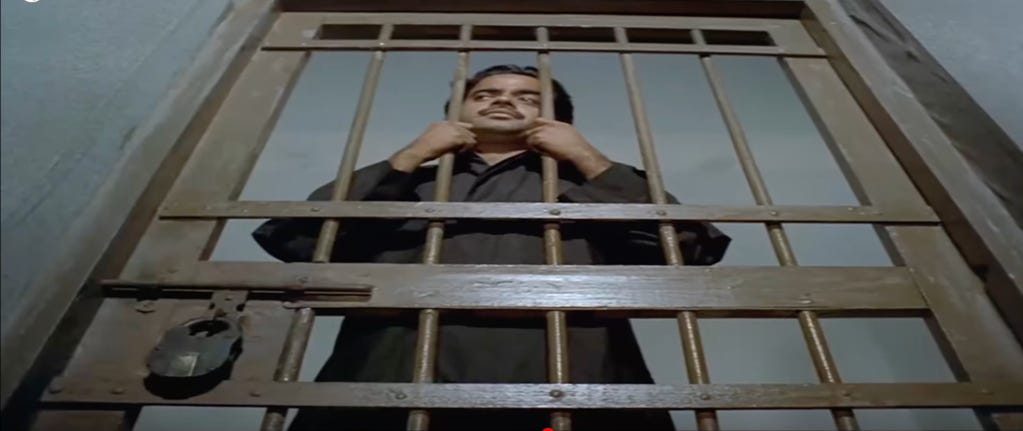
However, things take a shocking turn when one of the attack survivors identifies Anand as her assailant. The tropes are just what one would expect from a pulp offering: voyeuristic gaze, kitschy elements, plenty of red herrings, woozy camera angles capturing the chaos to the point of being disturbing and exploitative. And finally, a stunning revelation. Even though she was credited for having a special appearance, getting a top star of Tagore’s calibre to act in such a provocative film was interesting in itself.
At a time when Shaitaan hit the theatres, the horror-thriller genre was yet to come into its own—both in B-movies and mainstream cinema. Typically, the B-films until then were focused on fantasy, sci-fi, and espionage and hardly had any darkness in them. The gory horror category popularised by the Ramsay Brothers, too, was a few years away. So, films like Shaitaan and Khoon Khoon (made by B-film stalwart Mohammed Hussain) were novelty. They certainly piqued the audience’s curiosity and did decent business, but, back then, they didn’t have the wider acceptance that contemporary films in the genre like Mardaani 2, Raman Raghav 2.0, or OTT shows like Asur have.
Despite these two back-to-back projects and the buzz, Chinoy didn’t make any more films in that decade. His final film Bad Aur Badnam (1984) was a tedious, sloppily made espionage drama about two warring spies who join hands to take down a common enemy. The film lacked the pulpiness of Chinoy’s earlier films and could pass off as any run-of-the-mill ’80s potboiler. The only source of (again, accidental) entertainment is watching Sanjeev Kumar miscast as a James Bond-esque spy, but it’s nowhere in the league of the campy fun that Kashmakash was.
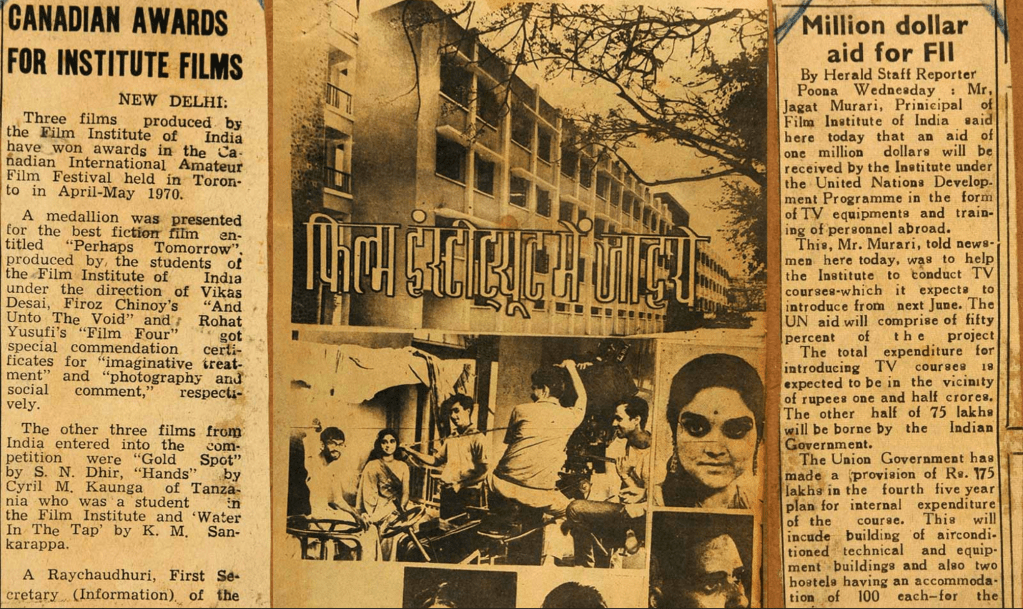
Sadly, not much is known or written about Chinoy and his work, so much so that Googling doesn’t even produce an image of the filmmaker. The only relics of his time are the mentions of his illustrious stint in FTII, where his diploma film And Unto The Void won international appreciation for “imaginative treatment.” Interestingly, it also featured Shatrughan Sinha—a collaboration that would continue throughout Chinoy’s film career.
Today the filmmaker’s connection with the filmdom lives on with his actress daughter Pinki Chinoy, who appeared in several ‘90s chartbusters like ‘Dil Le Le Lena’ (Auzaar, 1997) and the famous climax song ‘Meri raaton ki neendein’ from Sarfarosh (1999) and is a beloved star of contemporary Hindi B-films.
An edited version of the post was first published on Parcham Online on July 4, 2022.
All images used on Flashback Bollywood are the property of their respective owners and are used for representational purposes only.
 Flashback Bollywood
Feroz Chinoy died in 2016
LikeLike
Yes, that’s correct.
LikeLike